


























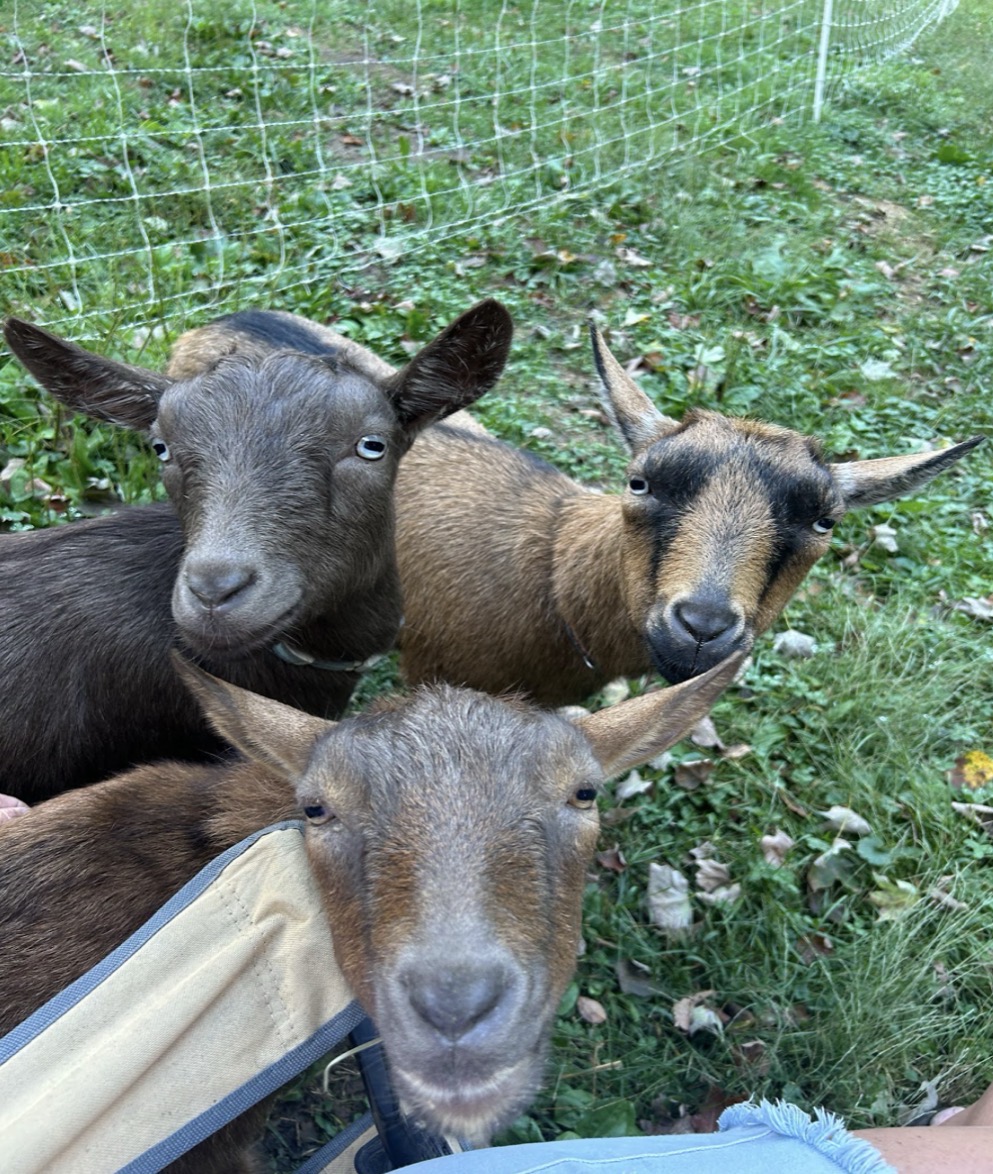
Ms. Wasserman is an English teacher here at the high school, but at home she cares for three goats named Ella, Dixie and Piper. They are Nigerian Dwarf goats and are decently smaller in size compared to the average goat – they tend to be 40% smaller than their male counterparts (bucks). In the last 14 years, she has had 10 goats including these three.
Ms. Wasserman has a perfect set up for the goats, “I have 4 acres of land, so they have lots of space to graze in the warm months. My barn was built around 1900, possibly earlier, and it’s set just a little ways off from my house; that way, the goats are close and I can keep an eye on them even when I’m not with them. They have a lower level where they like to hang out and look out the front doors, and there is an upper level where they sleep and relax in their straw. Their hay feeder is there, so they eat on that level, too. There is a smaller, enclosed space in the back of the barn where they have heat lamps they can sit under when it’s cold. I also sit in there with them in the evening for an hour or two, just petting them and hanging out.”
In the winter goats tend to do well, as many species live in the mountains where it gets very cold. Even this type of goat does well in the winter as they can develop thicker coats for the cold temperatures.
For their outdoor area, Ms. Wasserman says, “Their outdoor area is a fenced pen, about 200 feet around I think, and they enjoy being out there when the weather is nice. They like to sun themselves on little dog cots I have out there for them.”
A prime predator for goats is the coyote, so her goats could be at high risk throughout the warm months when they are outside “There are many coyotes in the area, so I close them in the barn at night for their safety. This past summer, my neighborhood had an issue with black vultures; they attack newborn animals and eat them alive! I was scared to death that they’d come after my goats, so I had to stay with them during the day and make sure nothing came after them.” Black vultures are highly aggressive birds and do tend to go after livestock. In this area, pets and farm animals are at risk to quite a few predators in the area.
Goats are intelligent and playful animals. Ms Wasserman’s favorite part of having goats is seeing all their different personalities. “Each one is so unique and quirky! They’re all really smart and SO loving and affectionate.” Goats are described as sociable, lively, inquisitive and independent animals. They learn good from bad and also can learn how to open up latches.
Ms. Wasserman notes a few of the more interesting facts about her favorite animal.“Goats are extremely fragile, and there are so many things that can kill them. It’s typical for them to not live that long because of the possibility of so many illnesses. Also, it’s not true that they eat everything. They do nibble on lots of things, but they don’t really ingest a lot of what they nibble on. Another thing is that goats are super smart and loving. They sit on my lap, lick me, rub on me, and basically just want to be with me all the time. They love people and enjoy visits from my neighbors. My one neighbor comes over in the summer and reads to them! Also, they have different voices for different situations, and their voices are very distinctive. I know right away which one is “talking”.”
Goats are not like pigs at all, they tend to be really picky with what they eat too. Also, goats do vocalize, sometimes to warn other goats and to communicate emotions, needs and social cues within their herd. If their screams are sharp they could be in distress, pain or scared. If they are not they could also just be hungry. They also tend to get sick very easily, and when they do they do not tend to show it until the sickness progresses very far. Due to goats doing a lot of grazing they are very prone to parasites, like the Barber Pole worm. When they are young they tend to have very immature immune systems and they are very susceptible to pneumonia.
Ms. Wasserman’s goats sound like they are living their best life and are incredibly well cared for.