





















As election day passes and ballots are counted, information regarding the political participation of America’s youth is showing out. Especially in New York City, New Jersey and Virginia, an influx of Gen-Z voters has been noted as all around the country new political figures are stepping up to the polls.
In part, the increase in turnout from young people is due to unhappiness with current political ongoings. Being the first opportunity for new leadership since the 2024 presidential election, the mayoral and gubernatorial elections were widely populated by those looking to make a change.
Another reason for the increase in youth participation is a surge in emphasis on social media campaigning. According to Pew Research Center, 41% of Americans aged 18-29 say their primary source of news is social media. Unlike common news outlets, social media is most often used by the majority of both political party’s youth, crucial for the swing votes of those who hold moderate views but still vote for the main factions. The increasing information sent out to America’s youth through their most populated forms of media led to the influx of political participation seen in recent elections.
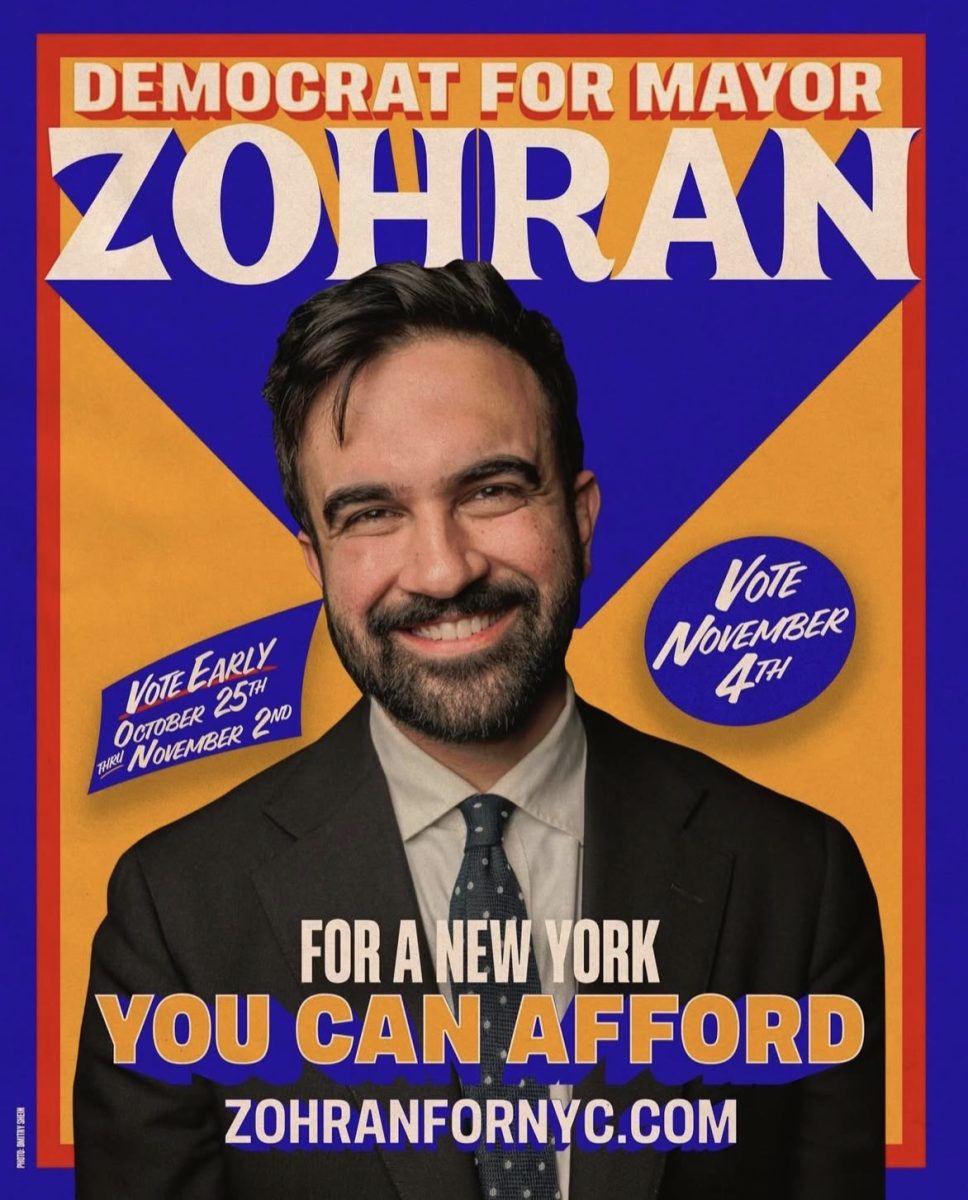
Specifically in New York City, young voters powered democrat Zohran Mamdani’s victory. Polls show that approximately one in five people ages 18-34 voted in the mayoral election with 78% of those voters choosing Mamdani.
Historically, turnout for municipal elections in NYC showed far less participation, marking a prominent shift in voting ideology. For Mamdani, the mayoral campaign was led with strong social media marketing and funky graphics that targeted young people in NYC looking for equal housing opportunities and younger representation in their city’s government. Mamdani was met with criticism from wealthy people in the city and faced backlash from President Trump in his early campaigning days.
NPR highlights Ruby Belle Booth, a member of the nonpartisan research organization CIRCLE, who studies young voters. She explains that there seems to be a shift in partisan politics, with young voters voting on certain issues rather than with a specific party. “I think that young people, we’ve seen, are not really thinking about politics in terms of those two parties and are evaluating it more in terms of the issues that they really care about,” she says for NPR. Particularly, the issue in NYC is housing prices, with thousands of emerging adults across the country echoing the same sentiments in their cities. For this reason, Mamdani has become a pillar for the respect of young peoples’ challenges. The question remains with whether or not Mamdani’s claims for change are even possible in the world today. Many who believe in his motive agree that it is better to try for change than stay in the stagnant market.
Mamdani’s campaign was not the only one inciting a rally for Gen-Z and Millennial voters, however. On November 4, democrat and former CIA agent Abigail Spanberger won the gubernatorial election in Virginia. Spanberger is the state’s first female governor after retiring from her place in Congress in 2024. Similar to Mamdani, PBS News explains that Spanberger ran a campaign emphasizing issues relative to young people today. Her victory is yet another representation of issue-focused voting from youth who are concerned with economic, LGBTQ+ and abortion policies. Most prominently in the pool of young voters are those attending Virginia’s public universities. According to Erika Vasquez, a reporter for The Commonwealth Times, the independent press for Virginia Commonwealth University (VCU), “NextGen America, a youth-based advocacy group, mobilized thousands of young voters ahead of Election Day to turn out for the issues that are most important to them.” Their work paid off, with voter turnout increasing 34% in comparison to 2021’s turnout at William and Mary, 41% at James Madison University, and 8% at VCU. Similarly, voters out of college and up to age 30 showed up at the election, with the highest attendance percentage since 2021 (Vasquez). Across the nation, college students are beginning to lead movements encouraging civic engagement, a benefactor for high voting turnout.
In the New Jersey gubernatorial election, members of Stevens Institute of Technology’s student government are helping register hundreds of new student voters and are motivating them to cast a ballot. According to CIRCLE, voters ages 18-29 increased turnout since the 2017 governor’s race by 12%. As a result of young voter turnout, democrat Mikie Sherrill was elected into office. Sherrill argues for reproductive rights and is a leader of reproductive freedom. Like other candidates this last election season, she also focused on the housing market and making her state more affordable to the people who live in it. Sherrill also emphasized a need for equal education opportunities for young children throughout New Jersey. With strong favorability from voters under the age of 30, Sherrill is a prime example of how young voters’ voices can be heard.
Throughout late October and early November, numerous young people found themselves attending the polls in order to make a change. Especially in New York, Virginia and New Jersey, representative results were showcased. For rising adults, voting is one of the most fundamental ways for political voices to be heard and it is crucial to future generations that the government young people elect is one that is decided on by the masses. As U.S democracy continues on and midterm elections are soon to come, young generations show promise in political participation.