
























On March 24, the New Mexico Department of Justice released their decision on a case impactful to social media users across the globe. Found guilty of the negligence of the safety and protection of children on social media, Meta was ordered to pay 375 millions dollars in civil penalties. The verdict follows a two year litigation which held Meta accountable for their dishonesty and design choices that intentionally harm children.
In a separate, but similar, case in California, a jury found that Meta and Google were guilty of encouraging what NPR describes as “the depression and anxiety of a woman who compulsively used social media as a small child, awarding her $6 million.” Holding major creators in Silicon Valley accountable, the case represents the first time a jury has concluded that social media apps should be treated as “defective products for being engineered to exploit the developing brains of kids and teenagers” (NPR).
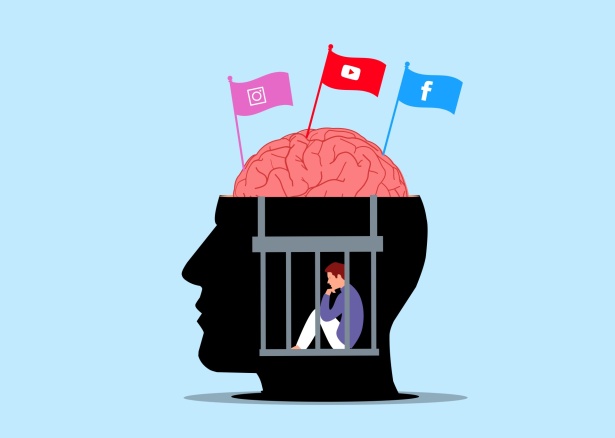
The recent findings have struck up conversation on whether or not big industry changes will be made to protect the lives of young people. Features including infinite scroll, personalized algorithms, constant notifications and instant gratification make social media highly addictive to users, especially young generations, who get sucked in. In “The Social Dilemma,” a documentary featuring top developers for companies including Google, Facebook and Pinterest, experts explain the disastrously negative effects of social media. Edward Tufte, a statistician and guest in the documentary says, “There are only two industries that call their customers ‘users’: illegal drugs and software.” He highlights the well known addictive tendencies of social media that are placed there by developers to increase revenue. It’s estimated that social media companies made upwards of $11 billion from advertising to minors in the US alone – a mechanism directly based on the collection of user data to keep a person hooked.
Across the world, a call for safer use of media has been put out. The Guardian explains that Meta chief Mark Zuckerberg and Instagram head Adam Mosseri claim that sexual exploitation and harm to mental health in children was “inevitable on the company’s platforms due to their vast user bases.” While major CEOs try to protect their side of the argument, millions across the world and in the US are pushing for more protection through reduction in addictive design elements like notifications and infinite scroll, new styles of parenting and truly effective age restrictions.
At HHS, the problem with phones is obvious. From classroom to classroom, the expectation is that phones are put out of reach, but the reality is the opposite. Whether it’s smuggled into class, used vehemently in the hallway or sitting ever-present at the lunch table, students find a way to keep their phones with them at all times. For the New Dimensions class, screens are discussed during a sociology unit, culminating with a cleansing challenge. Students sign their names on the board under a contract to abstain from any social media for as long as they can. While many students fail early, many go on, reporting that it’s made them truly understand the harmful impact it had on their lives.
As for the New Mexico case, the New Mexico Attorney General Raúl Torrez says, “In the next phase of this legal proceeding, we will seek additional financial penalties and court-mandated changes to Meta’s platforms that offer stronger protections for children.”
While these two cases are only the start of what Martha and Newton Minow of the Harvard Law Review say is the need for more regulation of large social media companies, many hope to see more instances of Silicon Valley facing repercussions for years of destructive work.
Most notably, however, is the push to keep social media platforms while making them safer. For younger generations, social media provides a hub for world news, friends and other information. In Nepal, for example, an attempted ban on Tik Tok incited large youth riots in what Time Magazine stated was “a warning to authoritarians worldwide.”
Regardless of the differing views on the use of social media, the trials which took place in New Mexico and California represent the first time big social media businesses have faced legal backlash for addictive mechanisms, something that will be continuously watched moving forward.